.webp)

.jpeg)
 ChatGPT
 Perplexity
 Gemini
 Grok
Grok
 Claude
A marketing proposal is a document an agency or freelancer sends a prospect to win a marketing engagement. It states the client's objectives, the strategy and scope you'll deliver, the timeline, the expected results, and the price, structured to make saying "yes" easy.
This marketing proposal template walks you through the seven sections that actually win work, an annotated example you can copy, a six-step writing process, and the pricing models that keep your scope clear. It's built for agencies and freelancers, and built to get signed, not just downloaded as another static PDF.
What is a marketing proposal?
A marketing proposal is a sales document that lays out how you'll help a client hit a specific marketing goal, and asks them to hire you for it. It connects their problem (not enough qualified leads, a stalled launch, weak social presence) to a concrete plan with deliverables, a timeline, KPIs, and a price.
It's a sales asset, not a creative brief. Every section exists to move the reader one step closer to signing. The best ones read like a tailored answer to a single prospect, not a recycled deck with the logo swapped out.
Marketing proposal vs. marketing plan: what's the difference?
People mix these up constantly, and it costs deals. A marketing plan is internal: it's the full strategy a company or agency uses to run campaigns over a quarter or a year, channels, budgets, calendars, owners. A marketing proposal is external and persuasive: it's what you send a prospect before they've hired you, to convince them to.
Keep the proposal lean and persuasive. Save the granular campaign detail for the plan you build after they sign.
What to include: the 7 essential sections
Every winning marketing proposal answers seven buyer questions in order. Miss one and you create a reason to hesitate. The exact labels vary across guides, HubSpot's guide to proposal structure groups them slightly differently, but the underlying logic is the same. Here's the structure that works whether you're a solo freelancer or a digital marketing agency.
1. Cover and executive summary
The cover sets the tone, your prospect's logo and project name signal "this was made for you." The executive summary is two to four sentences that name the client's goal, your headline approach, and the outcome you're targeting. Write it last; it's the part busy decision-makers read first.
2. Client problem and objectives
Prove you listened. Restate the prospect's situation in their own words, then turn it into clear, measurable objectives. Vague ("grow your brand") loses. Specific wins: "increase qualified inbound leads by 30% within two quarters." SMART objectives here do more selling than any feature list. This is the section that separates a tailored proposal from a template dump.
3. Proposed strategy and scope
Your plan, in plain language. What channels, what campaigns, what content. Crucially, define what's in scope and what's out, ambiguity here is where projects bleed time and trust. A short "out of scope" line ("paid media spend, photography, and PR are not included") protects both sides.
4. Deliverables and timeline
Turn strategy into a checklist of concrete outputs (e.g., "12 blog posts, 1 landing page, monthly reporting dashboard") mapped to a timeline or phases. Buyers relax when they can see the shape of the engagement week by week.
5. KPIs and expected results
Name how success gets measured: traffic, leads, conversion rate, cost per acquisition, ROAS, follower growth, whatever maps to the objectives in section 2. Be confident but honest. Promise a process and leading indicators, not guaranteed revenue you can't control.
6. Pricing and terms
The section everyone scrolls to. Present it cleanly (a table beats a paragraph), tie each line to value, and state the model, retainer, project, or performance. Include terms: payment schedule, contract length, cancellation, and what triggers extra cost. We break down pricing models further down.
7. About and next step
A short credibility block, relevant case studies, results, the team, then one unmistakable call to action. Don't end with "let us know your thoughts." End with a clear next step: review, sign, and book the kickoff. The easier you make "yes," the faster you close.
Marketing proposal template (annotated example)
Here's the marketing proposal template filled in for a realistic scenario: a freelance marketer pitching a six-month engagement to a DTC skincare brand. The notes in italics explain why each part is written the way it is.
Cover, Glow Skincare × [Your Studio] : Growth Marketing Proposal, July 2026.
Their name first. It's their project, not your sales doc.
Executive summary
Glow Skincare wants to move from a single-channel Instagram presence to a predictable, multi-channel acquisition engine. This proposal outlines a six-month growth program across content, email, and paid social, designed to lower blended cost per acquisition and build an owned audience the brand controls.
Three sentences. Goal, approach, outcome. A founder can read it in fifteen seconds and know if it's worth their time.
Client problem & objectives
Today, ~80% of Glow's revenue depends on one channel, which makes growth fragile and CAC volatile. Over the next six months, we'll work toward three objectives:
• Reduce blended CAC by building owned channels (email + organic) alongside paid.
• Grow the email list to a healthy, segmented base of engaged subscribers.
• Establish a content engine that produces a steady stream of publish-ready assets each month.
Numbers are framed as direction and ranges, not promises the freelancer can't control. The problem is in the client's language.
Proposed strategy & scope
In scope: content strategy and production (8 articles/month), a 3-flow email automation setup, and paid social management across Meta. Out of scope: ad spend, influencer fees, and product photography (quoted separately if needed).
The "out of scope" line is the unsung hero, it prevents the awkward "I thought that was included" conversation in month two.
Deliverables & timeline, a phased table: Month 1 foundations, Months 2–4 build, Months 5–6 optimize. Each phase lists concrete outputs.
KPIs & expected results, traffic, list growth, email-attributed revenue, and blended CAC trend. Leading indicators first, lagging revenue framed honestly.
Pricing & terms
Monthly retainer: $X/month, 6-month minimum, billed at the start of each month. 30-day notice to cancel after the minimum term. Ad spend billed at cost, separately.
One model, stated plainly. The terms answer the questions a prospect would otherwise email back to ask.
About + next step
Two relevant DTC case studies, then: "Ready to start? Review the proposal, sign below, and we'll book your kickoff call this week."
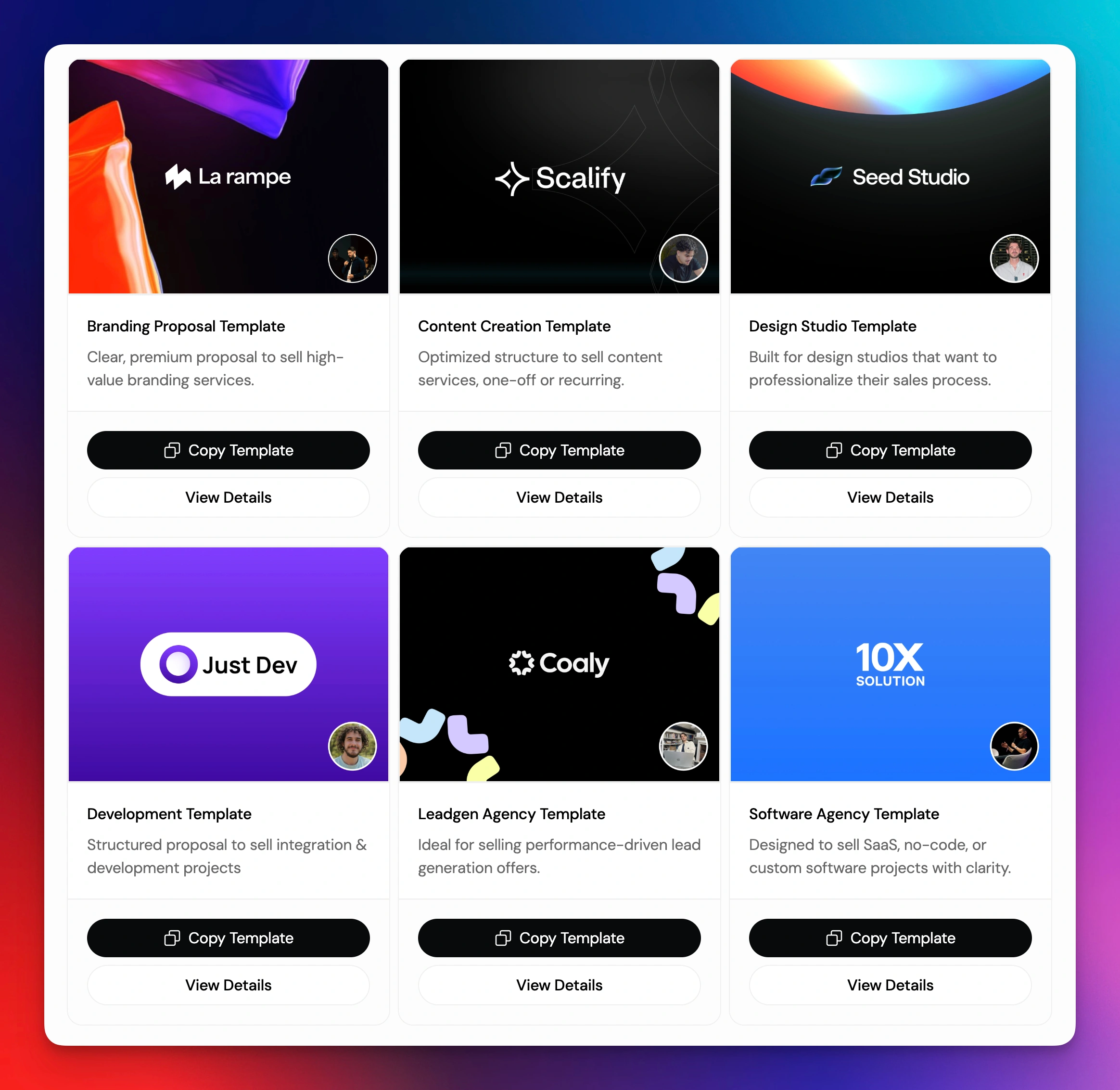
Want a head start? Our interactive proposal templates ship with this exact seven-section structure, so you fill in the content instead of formatting from scratch.
Tired of rebuilding the same proposal in Google Docs every time?
Start from a marketing proposal template that's already structured to convert, then send it as a tracked, signable web link.
→ Browse interactive proposal templates
How to write a marketing proposal in 6 steps
If you've ever stared at a blank doc wondering how to write a marketing proposal, this is the order that works. Each step builds on the last, so the writing gets easier as you go.
Step 1: Run a real discovery call
Before you write a word, understand the prospect's goal, current channels, budget range, and what "success" means to them. The proposal is only as good as the discovery behind it. Take notes in their words, you'll reuse them in section 2.
Step 2: Define objectives and scope
Translate the discovery into two or three SMART objectives, then decide exactly what you'll deliver to hit them. Lock scope here, before pricing, so the price reflects real work and not a guess.
Step 3: Draft the strategy and deliverables
Map objectives to channels, campaigns, and concrete outputs on a timeline. Be specific enough that the client can picture the engagement, but don't dump your entire methodology, save depth for after they sign.
Step 4: Set KPIs and pricing
Choose the metrics you'll be measured on, then price the engagement using the model that fits the work (retainer, project, or performance). Tie every pricing line to a deliverable so the cost reads as value, not as a number to negotiate down.
Step 5: Write the summary and polish the copy
Now write the executive summary, it's easiest once everything else exists. Cut filler, kill corporate clichés, and make sure every section answers a buyer question. Most sales proposal best-practice guides agree on one thing here: read it as if you were the prospect with three other proposals on your desk.
Step 6: Send it as a trackable, signable link
Don't email a PDF and hope. Send a web proposal you can track, so you know when it's opened and which sections get re-read, then follow up at the right moment, with an e-signature already built in. This is the step most templates skip, and it's the one that shortens the gap between "sent" and "signed."
Digital, social media & SEO proposals: what changes
The seven-section skeleton holds across every niche. What changes is what fills sections 3, 4, and 5. Here's how to adapt the marketing proposal template by specialty.
A digital marketing proposal template leans on the multi-channel scope and blended metrics. A social media marketing proposal template swaps in a content calendar and engagement-led KPIs, and usually shows sample creative directions. An SEO proposal needs a credible audit-to-results narrative, because clients are (rightly) wary of vague ranking promises. In every case, the structure stays the same, you just change the contents of the strategy, deliverables, and results sections.
How to price a marketing proposal
Pricing is where good proposals get tense and weak ones get negotiated to zero. The fix is clarity: pick one model, tie it to scope, and state the terms. There are three models, and most marketing work uses the first.
- Retainer, a fixed monthly fee for an ongoing scope (e.g., $X/month for content + social). Best for continuous marketing where the work recurs. Predictable for both sides; the standard for agency relationships.
- Project / fixed fee, one price for a defined deliverable (a website launch campaign, a brand relaunch). Best when the work has a clear start and end. Protect yourself with a tight scope and a change-order clause.
- Performance-based, fees tied partly to results (leads, revenue, ROAS). Tempting, but only works when you control enough of the funnel to be accountable for the outcome. For most marketing engagements, a retainer with a performance bonus is safer than pure performance pricing.
Whatever model you choose, make the number easy to understand and tie each line to value. A clean pricing table with a payment schedule and a clear cancellation clause closes faster than a vague lump sum, because it removes the questions a hesitant buyer would otherwise sit on. For more on structuring the commercial sections, see our business proposal template and project proposal template guides.
From static doc to interactive proposal
Most marketing proposal templates hand you a Word or PDF file, that's what template libraries like Smartsheet's marketing proposal templates give you. That's fine for formatting, but a static document is blind. You email it, then you wait, with zero idea whether anyone opened it, read past page two, or forwarded it to the person who actually signs off.
An interactive proposal fixes that. Instead of a PDF, you send a web link the client opens in their browser. With Propal, that link is a living marketing proposal: you can see in real time which sections the prospect reads and how long they spend on each, so you follow up when interest is highest instead of guessing. You can embed a Loom walkthrough of your strategy, a Calendly booker for the kickoff call, and a Notion or Miro board with your roadmap, right inside the proposal.
When they're ready, they sign electronically (eIDAS-compliant) and can pay the deposit via Stripe without leaving the page. The whole "review : sign : pay" loop happens in one link. That's the difference between a document that gets downloaded and one that gets signed, and it's how agencies and freelancers using Propal close deals faster than they would with a static file.
You don't need to abandon the structure in this guide to get there. The seven sections stay exactly the same. You're just upgrading the container from a flat file to a trackable, signable, payable web proposal. Browse the proposal template software options if you want to compare formats first.

Send your next marketing proposal as a tracked web link, not a PDF.
See when it's opened, which sections land, and get it signed and paid in one place.
→ Start free with an interactive marketing proposal template
Conclusion
A winning marketing proposal isn't about fancy design, it's about structure that answers every buyer question and removes every reason to hesitate. Use the seven-section marketing proposal template above, adapt the strategy and KPIs to your niche, price with one clear model, and you'll send proposals that read like they were built for one prospect, because they were.
The last upgrade is the container. A static file gets downloaded; a tracked, signable web proposal gets signed. Keep the structure, change the format, and watch the gap between "sent" and "closed" shrink.
Keep building your proposal toolkit:
.webp)