.webp)

.jpeg)
 ChatGPT
 Perplexity
 Gemini
 Grok
Grok
 Claude
An RFP response template is a reusable structure you fill in to answer a buyer's Request for Proposal, cover letter, executive summary, your understanding of the requirements, proposed solution, pricing, proof, and appendices. This guide gives you a free RFP response template, a step-by-step process for responding to an RFP, and an annotated example you can copy. Built for agencies and freelancers who are on the answering side, the vendor writing the bid, not the buyer issuing it.
That distinction trips a lot of people up, so let's clear it now. The RFP is the document the client sends out. The RFP response is the proposal you send back to win the work. If you searched "rfp response template," you're the seller, and everything below is about helping you respond and win.
What is an RFP response? (and why it's not the RFP)
An RFP response is the proposal a vendor submits to win a project after a buyer issues a Request for Proposal (RFP). It answers every requirement in the RFP, lays out your proposed solution, and makes the case that you're the right partner, at a price the buyer can approve.
Here's the part most articles bury: the RFP and the RFP response are two different documents, written by two different sides.
- The RFP is created by the buyer (a company, agency, or government body) to describe what they need and invite vendors to bid. That's procurement's job.
- The RFP response is created by the vendor, you, to respond to that request and win the contract. That's a sales document.
If you run a digital agency, a design studio, or you freelance, the RFP response is the one you care about. A prospect sends you an RFP. You respond. The quality of that response decides whether you win a $5K project or a $150K retainer. A reusable RFP response template means you stop rebuilding the structure from scratch every time and start spending your energy on the parts that actually win, your understanding of their problem and your differentiation.
RFP vs RFI vs RFQ
You'll see three acronyms in procurement, and your response changes depending on which one lands in your inbox:
An RFP sits in the middle. The buyer knows roughly what they want but is comparing approaches and partners, not just prices. That's why an RFP response is the most strategic of the three, it's where you win on understanding and differentiation, not just being the cheapest bid.
The RFP response template (7 sections)
Here's the RFP response template. Seven sections, in this order. It mirrors how evaluators score bids and matches the structure the leading proposal-management resources converge on. Use it as a skeleton, then tailor it to the exact questions in the RFP you received.
1. Cover letter
One page, addressed to the named procurement lead (never "To whom it may concern"). State the project name, signal you understand their core goal, and say in one sentence why you're the right partner. This is the hook, it sets the tone before the evaluator reads a single requirement.
2. Executive summary
The most-read section after the cover letter. Frame it around their objectives, not your company. State what you're proposing, the problem it solves, and the outcome they can expect. If a busy evaluator only reads this page, they should already want to shortlist you.
3. Your understanding of the requirements
Restate what they asked for, in your own words. This proves you actually read the RFP. Mirror their language and priorities. Skipping this is the fastest way to look like you sent a generic bid to ten prospects.
4. Proposed solution & methodology
The core of the response. Map your solution to each requirement, don't make the evaluator guess whether you can do something. Include a phased timeline (discovery, build, review, launch), the deliverables they'll receive, and who on your team does what.
5. Pricing
Break it down so there are no surprises: fixed fees, day rates, retainers, optional add-ons. Tie price to value, not just hours. Be explicit about what's in scope and what isn't. Ambiguous pricing kills more bids than high pricing does.
6. Proof: case studies & references
Two or three case studies that mirror their industry, scale, and challenge. Each one: client context → challenge → what you did → result. Add references with names and contacts. This is where you convert "sounds good" into "we trust them."
7. Appendices & terms
Team bios, certifications, relevant security or compliance details, and your terms. Keep the body lean; push supporting documents here so the main proposal stays focused.
Want this structure ready to fill in? Skip the blank page, start from a proposal template built around these exact sections, then drop in your client's specifics.
That's the template. For a broader version that works beyond formal RFPs, see our business proposal template; for project-scoped bids, the project proposal template covers the same bones with a delivery-plan focus.
How to respond to an RFP, step by step
Having the template is half the job. The other half is the process around it. Here's how to respond to an RFP without scrambling at the deadline, the same sequence whether you're a solo freelancer or a five-person agency.
Step 1 : Read the RFP twice and decide go / no-go
Before you write anything, read the entire RFP, including the fine print on format, deadline, and evaluation criteria. Then make an honest call: is this winnable, and is it worth your time? Responding to an RFP you can't win burns days you could spend on warm pipeline. If the incumbent vendor is clearly favored, the budget is half your floor, or the requirements don't fit, walk away. A clean no-go is a strategic win.
Step 2 : Map every requirement to a section
List every requirement and question in the RFP. Map each one to where it'll be answered in your response. Evaluators often score on a checklist, if you miss a requirement, you lose points you didn't have to. This map becomes your outline.
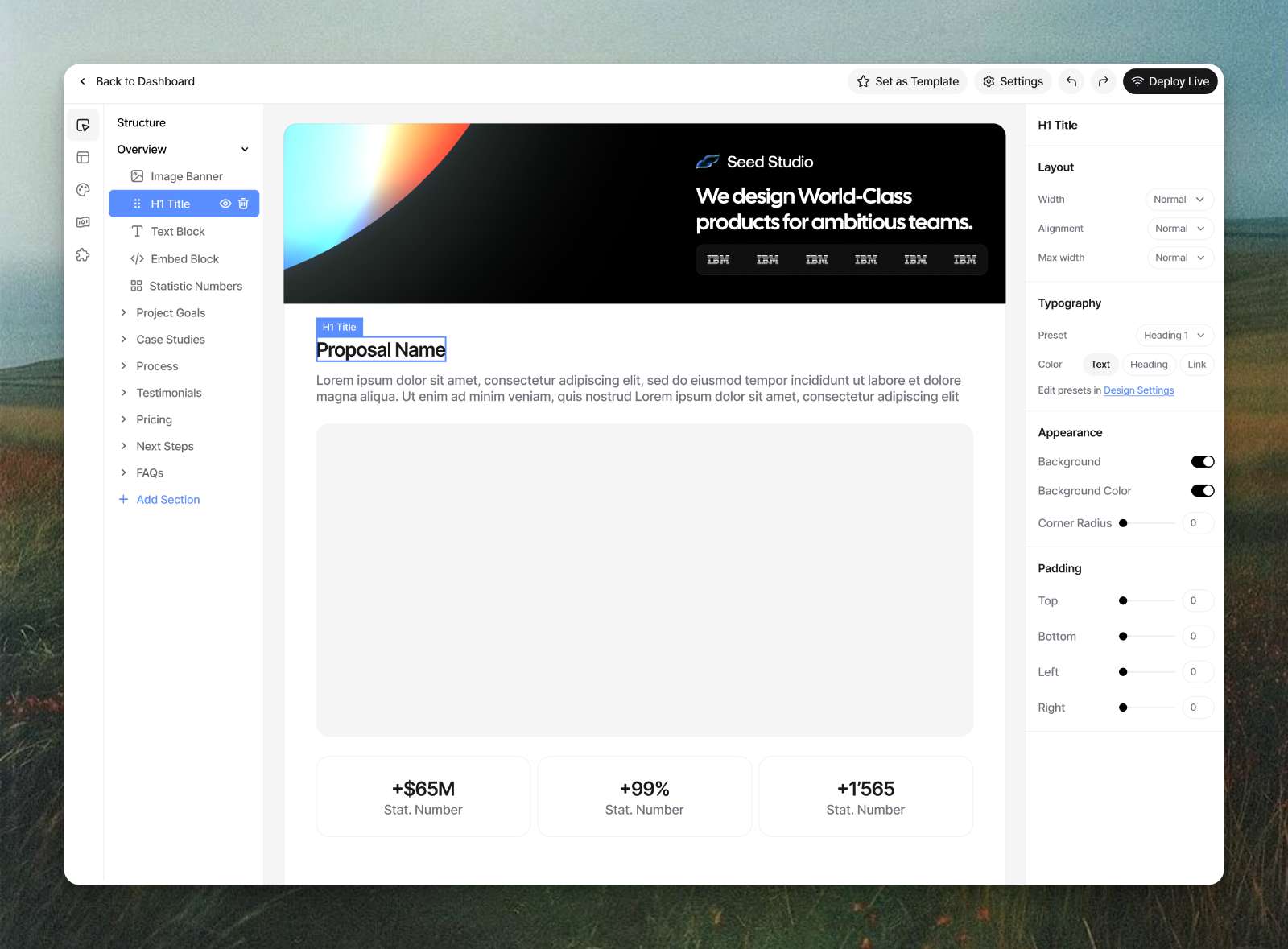
Step 3 : Draft the response using the 7-section template
Now fill in the template above. Lead with the client, not your company. Write the executive summary last (it's easier once the solution is clear). Reuse boilerplate for company background and certifications, but write the understanding and solution sections fresh for this specific client every single time.
Step 4 : Price for value and clarity
Build pricing that's easy to approve. Itemize. Tie line items to outcomes. If the RFP allows options, offer a tiered structure (good / better / best) so the buyer can self-select up. Make the numbers unambiguous.
Step 5 : Add proof that mirrors their situation
Pull the two or three case studies closest to their industry and deal size. Generic logos don't persuade; a story that mirrors their exact challenge does. Confirm your references are warm before you list them.
Step 6 : Proofread, format, and submit on time
Match the format the RFP demands (page limits, file type, section order). Proofread for typos and broken numbers, a pricing error or a wrong client name signals carelessness. Submit before the deadline. Late, in most procurement processes, means disqualified, no matter how good the bid.
Step 7 : Follow up and track engagement
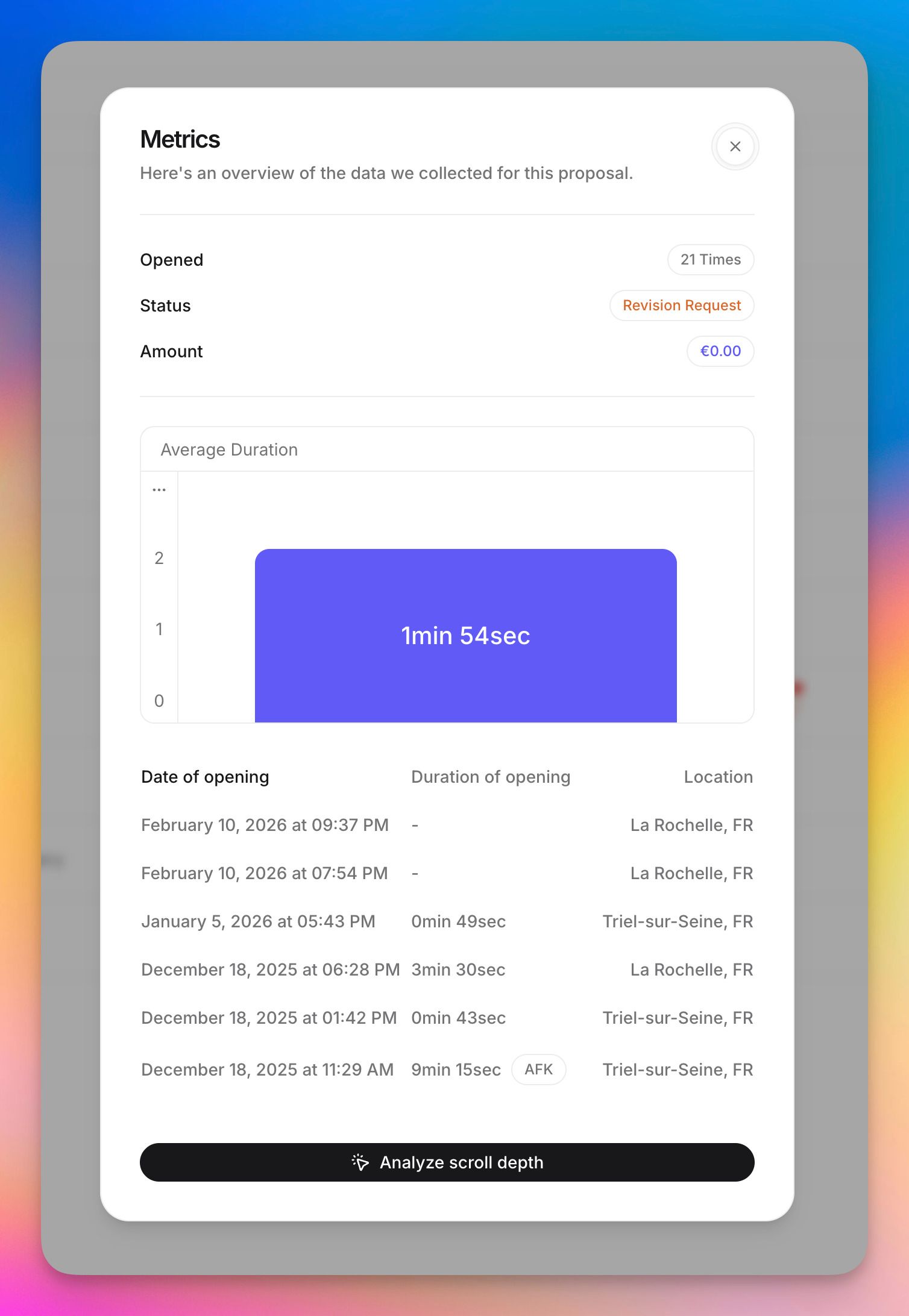
Submission isn't the end. Send a short, polite follow-up confirming receipt and offering to walk them through it. This is also where the format of your response starts to matter: if you can see when the buyer opened it and which sections they spent time on, you know exactly when and what to follow up about. More on that below.
For more on how buyers evaluate bids and what makes a response competitive, the U.S. Small Business Administration's guide to winning contracts is a useful external reference.
RFP response examples (annotated)
Templates tell you the structure. Examples show you the tone. Below are short annotated RFP response examples, the kind of language that scores, with notes on why it works. Adapt the wording; keep the moves.
Example: cover letter opening
"Thank you for the opportunity to respond to your RFP for the [Brand] website redesign. We've read your goals closely, a faster site, a clearer conversion path, and a CMS your team can actually run without us, and this proposal is built specifically around those three outcomes."
Why it works: It names the project, proves it read the RFP by echoing the buyer's three goals back, and frames the whole document around their outcomes, all in two sentences. No "we are a full-service agency founded in…" throat-clearing.
Example: understanding of requirements
"You're managing three disconnected tools today, which means your team rekeys the same data twice a week and reporting takes two days you don't have. Our read: the real ask isn't 'a new website,' it's a single source of truth your team trusts. We've designed our solution around that."
Why it works: It restates the problem in the client's own terms and reframes the surface request ("a website") as the underlying need ("a source of truth"). That reframing is what separates a partner from a vendor, and it's exactly where a generic, AI-spat-out bid falls flat.
Example: pricing clarity
"Phase 1 – Discovery & architecture: $6,000 (fixed). Phase 2 – Build & integration: $18,000 (fixed). Optional: ongoing support retainer at $1,500/month, cancellable with 30 days' notice. Total fixed scope: $24,000."
Why it works: Fixed numbers, phased, with the optional retainer clearly separated. The buyer can approve the core scope and decide on support later. No "starting from," no hidden hourly creep.
For longer, industry-specific examples, the patterns in our consulting proposal template translate directly to consulting and advisory RFP responses, where the methodology and proof sections carry most of the weight.
What makes an RFP response win
You can follow the template perfectly and still lose. The winning responses get four things right that the losing ones don't.
Compliance: answer every question, in their format
Evaluators score against a list. The single fastest way to lose is to leave a requirement unanswered or to ignore the requested format. Before you submit, run a final pass: every requirement mapped, every question answered, page limits respected, file type correct. Compliance gets you into the shortlist; the rest gets you the win.
Differentiation: prove you understood this client
In a market where AI can spit out a passable generic RFP response in seconds, the bids that win are the ones that prove genuine understanding. Mirror their language. Reframe their surface request as the real need. Reference their specific constraints. Buyers can smell a templated, mass-sent response, and it reads as "they didn't really want this one."
Pricing clarity: make it easy to say yes
Ambiguous pricing creates friction at the exact moment the buyer is ready to approve. Itemize. Tie price to outcomes. Separate must-haves from options. When the numbers are clear and the value is obvious, the internal approval conversation is short, and short approvals win.
Follow-up and visibility: don't go dark after submission
Most vendors submit and wait. The ones who win stay engaged, a receipt-confirmation note, an offer to present, a well-timed nudge. The hard part is timing: send too early and you're pushy, too late and the decision's made. This is where how you sent the response matters as much as what's in it.
Static document vs interactive response
Here's the thing nobody mentions in the standard RFP guides: a Word doc or PDF response is dead the moment you hit send. You have no idea if the buyer opened it, which sections they read, or whether they shared it with their team. You're following up blind.
An interactive web response changes that. Instead of attaching a static file, you send a link to a web-based proposal, one the buyer opens in a browser, that you can update after sending, that they can sign and even pay through, and that tells you exactly how they engaged.
This is the gap Propal fills for agencies and freelancers. Propal turns your RFP response into a tracked, interactive web proposal: you see when the buyer opens it and which sections they linger on, you embed a Loom walkthrough or a Calendly booker right inside the response, and you collect a signature and a deposit through Stripe without leaving the document. For a $500–$15K agency or freelance engagement, that experience often beats a heavier, enterprise-grade bid tool, and it gives you the follow-up signals a PDF never will.
A fair caveat: some government and large-enterprise procurement portals require a specific file format uploaded to their system. When the RFP mandates a PDF in a portal, send the file. For everything else, the warm, direct, agency-style RFP that lands in your inbox, an interactive response is the edge. If you respond to RFPs often enough that tracking and reuse become a workflow, that's where dedicated proposal manager software earns its keep.
Your next RFP response, tracked and signable. Build it as an interactive web proposal, see exactly when the buyer reads it, and close with a built-in signature and deposit. Start free with Propal templates →
Conclusion
A good RFP response template saves you from rebuilding the wheel, but it doesn't win the bid on its own. The win comes from proving you understood this client, pricing clearly, backing it with relevant proof, and staying visible after you submit. Start from the seven-section structure above, run the seven-step process, and adapt the annotated examples to your own voice. Then think about the format: for agency and freelance RFPs that don't demand a procurement-portal PDF, an interactive, trackable response gives you the engagement signals and the closing tools a static document never will.
Keep building:
- Business proposal template
- Project proposal template
- Consulting proposal template
- Interactive proposal templates
→ Build your next RFP response as a tracked, signable proposal with Propal
.webp)